
“If this Tariff is not removed immediately, the U.S. will shortly place a 200% Tariff on all WINES, CHAMPAGNES, & ALCOHOLIC PRODUCTS COMING OUT OF FRANCE AND OTHER E.U. REPRESENTED COUNTRIES. This will be great for the Wine and Champagne businesses in the U.S.”
It’s likely that most of us remember this message on Truth by its owner. It was March 13, 2025. It was an example of the 'American First' agenda of the current American president. Although Italian wine was not his direct target, the export was affected as part of broader US tariffs on EU wines, Champagne and alcoholic products. The goal was to harm European businesses and promote U.S. manufacturing and jobs. After a few months, can we say that this goal has been achieved?
No. In fact, quite the opposite.
First and foremost, the NBER (National Bureau of Economic Research) debunks the myth that foreign producers bear the cost of trade wars. While some might slightly lower export prices to stay competitive (for example, dropping a $5 bottle to $4.74), this minor concession is quickly overwhelmed by the rest of the supply chai, because importers and retailers applying markups on the already inflated cost. This way, consumers end up paying roughly 134% of the actual tariff increase.
But why does this happen so quickly in the wine world? According to expert Maria Pechurina, the wine market is uniquely vulnerable. “At a high level, tariffs and trade measures tend to affect the wine market more quickly than many other consumer goods, due to relatively tight distributor margins and the product's perishable, brand-sensitive nature". Unlike non-perishable goods, wine pricing often adjusts within just one or two quarters. “In emerging markets such as China, India, and Brazil – she continues - layered import duties, excise taxes, and evolving trade agreements play an outsized role in shaping both accessibility and consumer perception of wine. These markets often use tariff structures not only for revenue generation but also as a form of protectionism for the domestic industry, which can significantly distort pricing and limit foreign market penetration.”
For the small business owner—the local wine shop or the corner bistro—the challenge isn't just the tax; it’s the unknown. Keith Wallace, Sommelier Program Developer of the National Wine School, explains that companies face a brutal choice: absorb the costs to keep customers or raise prices immediately and risk being seen as "gouging". “The greater problem, however, is not the increase itself but the uncertainty surrounding it.” Wallace clarifies “This means that the businesses are forced to wonder if more tariffs or sanctions will suddenly disrupt their entire supply chain, making the Cost of Goods Sold (COGS) far less predictable.“ For any wine business, reliable COGS is central to pricing strategy, he explains. “ In a volatile policy environment, that number becomes far less predictable than usual, and that uncertainty creates a difficult pricing dilemma.”
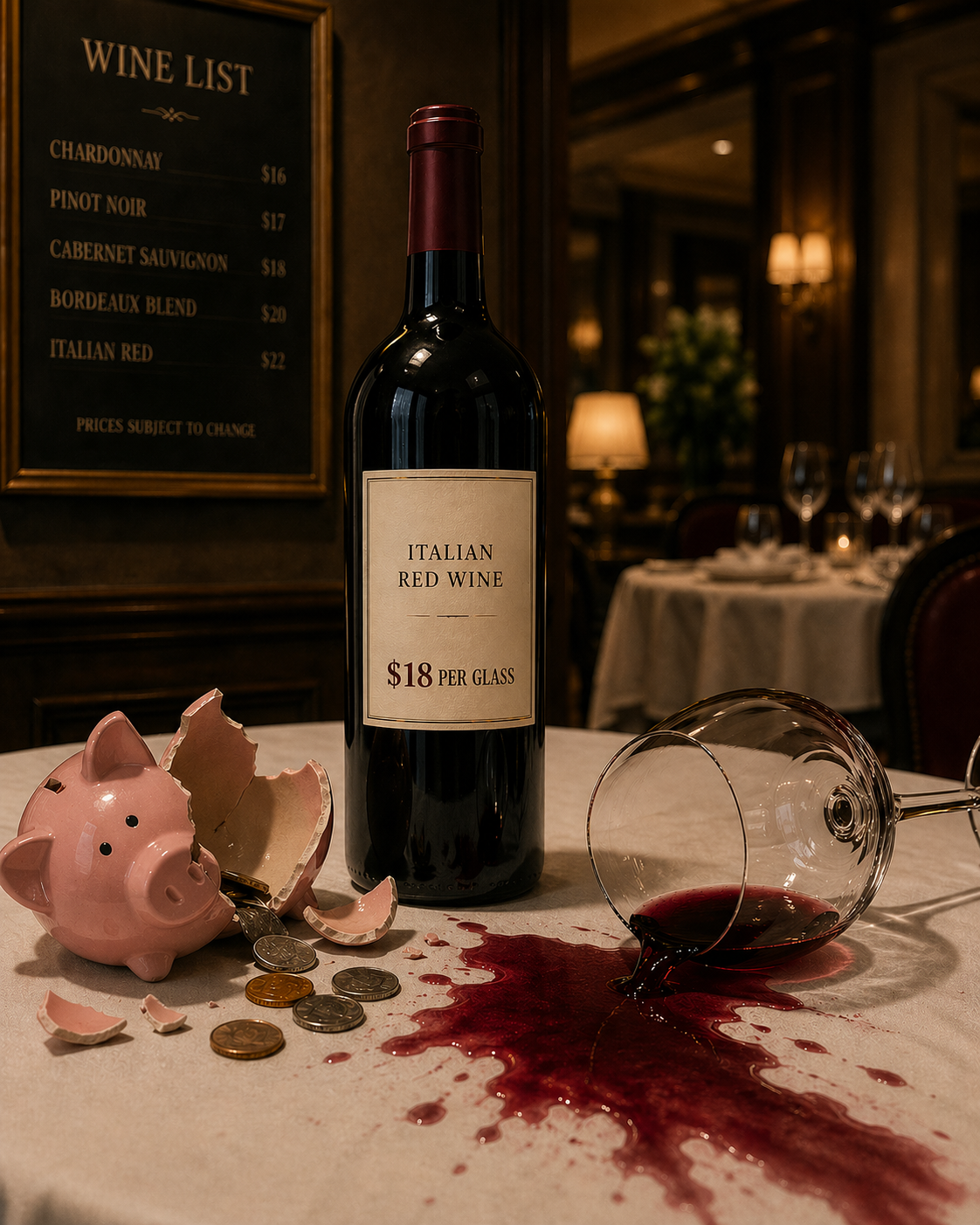
Bottom line: when trade policies shift, the government may see a rise in revenue, but almost every other player loses. Producers lose margins, importers lose volume, and consumers lose purchasing power. So, the next time you see a price hike on your favorite imported vintage, remember: it isn't just a tax on a bottle. It is a "hidden regressive tax" that multiplies as it travels from the vineyard to your glass.
Now: who is the authentic winner of this mess?