When the COVID pandemic broke out, we suddenly found ourselves all cooped up at home. Familiar moments like after-work drinks and evenings with friends became a thing of the past; no one could tell us if or when they would return. At some point—partly for fun, partly on a whim, or perhaps out of desperation—someone came up with the idea of remote tastings: since we could no longer physically gather at a bar or someone’s home, some of us launched “the virtual tastings” using bottles we already had at home or were able to get our hands on. In front of the computer camera, connected with friends via video call, we’d open bottles, taste wines, and exchange opinions.
We got used to drinking wine in front of a screen because we had no choice. This was the main cause of the current “screen-fatigue”: today, we simply refuse to hold virtual tastings. Or, sometimes, wine tasting in general.
Fact is, currently 77% of adults struggle with busy schedules. Most of them feel overwhelmed by a hectic style of life. Seemingly, finding a time that works for everyone prevents many people from seeing friends and family as often as they would like.
But this doesn’t mean that people are tired of wine and of the atmosphere that it can only create.
A national consumer study of 1,553 wine consumers conducted by Come Over October™ in partnership with LocalWineEvents.com did a meaningful test through an A/B visual experiment. Participants were split into two groups and shown an identical image of a social dinner scene. The only difference between the two images was the beverage on the table: one group saw guests drinking wine, while the other saw them drinking water.
The final outcome? When wine was present, 73% of participants described the atmosphere of the scene as “warm and relaxed”, compared to 65% for the image with water. Furthermore, when wine was on the table participants were more likely to assume the guests were "close or old friends" (48% vs. 38%).
And the wine on the table was associated with a special occasion and a gathering of friends - likely generously hosted by one of them.
This visual experiment showed, once again, that wine's power lies in creating a perceived sense of hospitality, shared space, and relaxed intimacy.
In times of economic difficulties and general uncertainty, rather than returning exclusively to expensive nights out, consumers are shifting towards something “easier”: a short message to invite a few of friends, some wine bottles, some food to pair with them. According to the study, 28.8% of respondents are socializing at home more often, while 26.4% are going out to bars and restaurants less frequently.
People are tired of digital events, and often they can’t afford formal restaurant dinners as they were used to do.
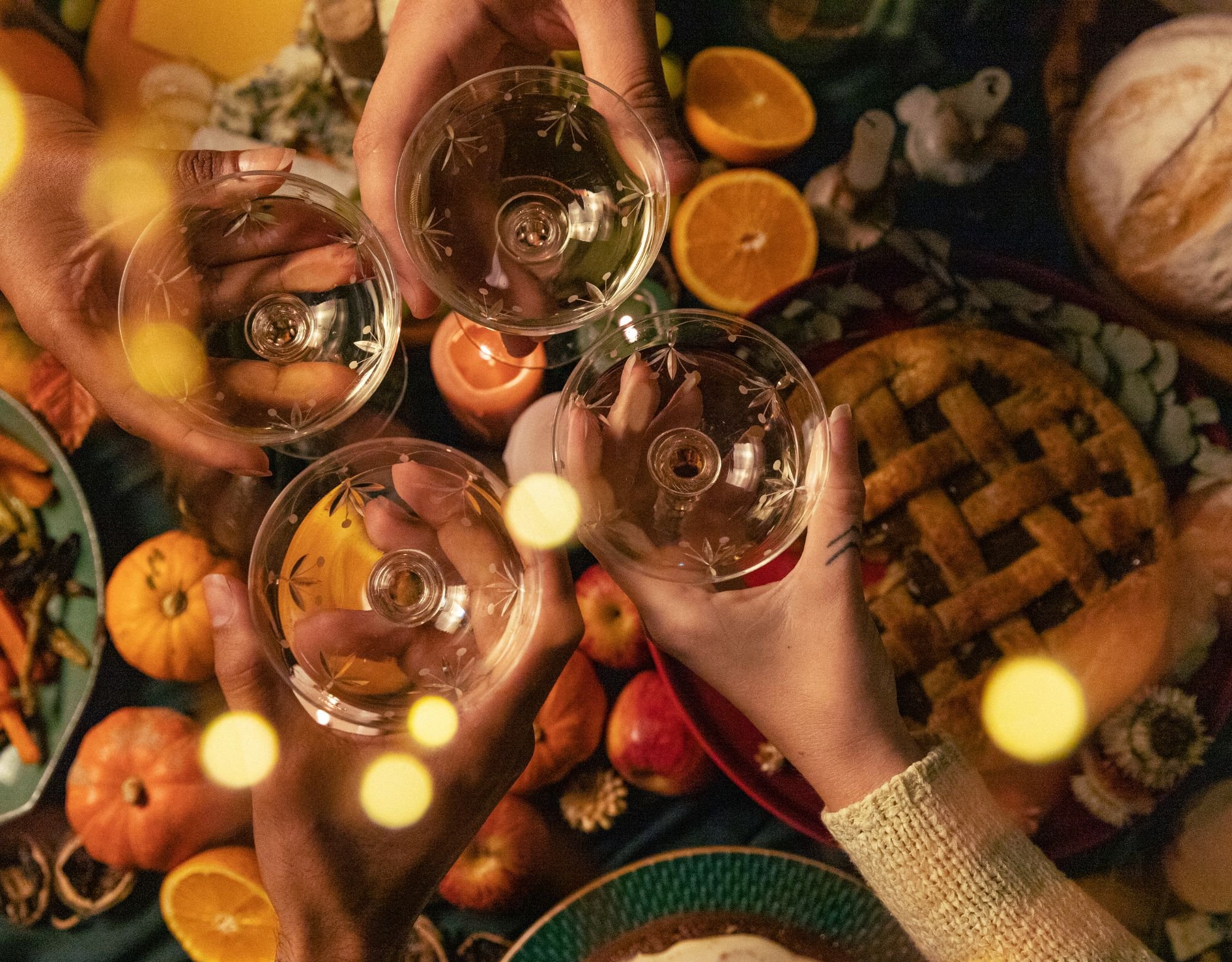
All they want is low-friction, and in-person hospitality at home. The “wine halo effect” also works in a simple gathering of friends at home.
In fact, even better.
*