
If, tasting a Grillo wine from the Marsala zone, you find it juicy, tropical and, to some extent, even savory, you are not wrong.
Western Sicily’s salt pans and vineyards form a seamless partnership between two ancient industries that both rely on the same generous terroir: intense Mediterranean sun, sea breezes, and mineral-rich soils.
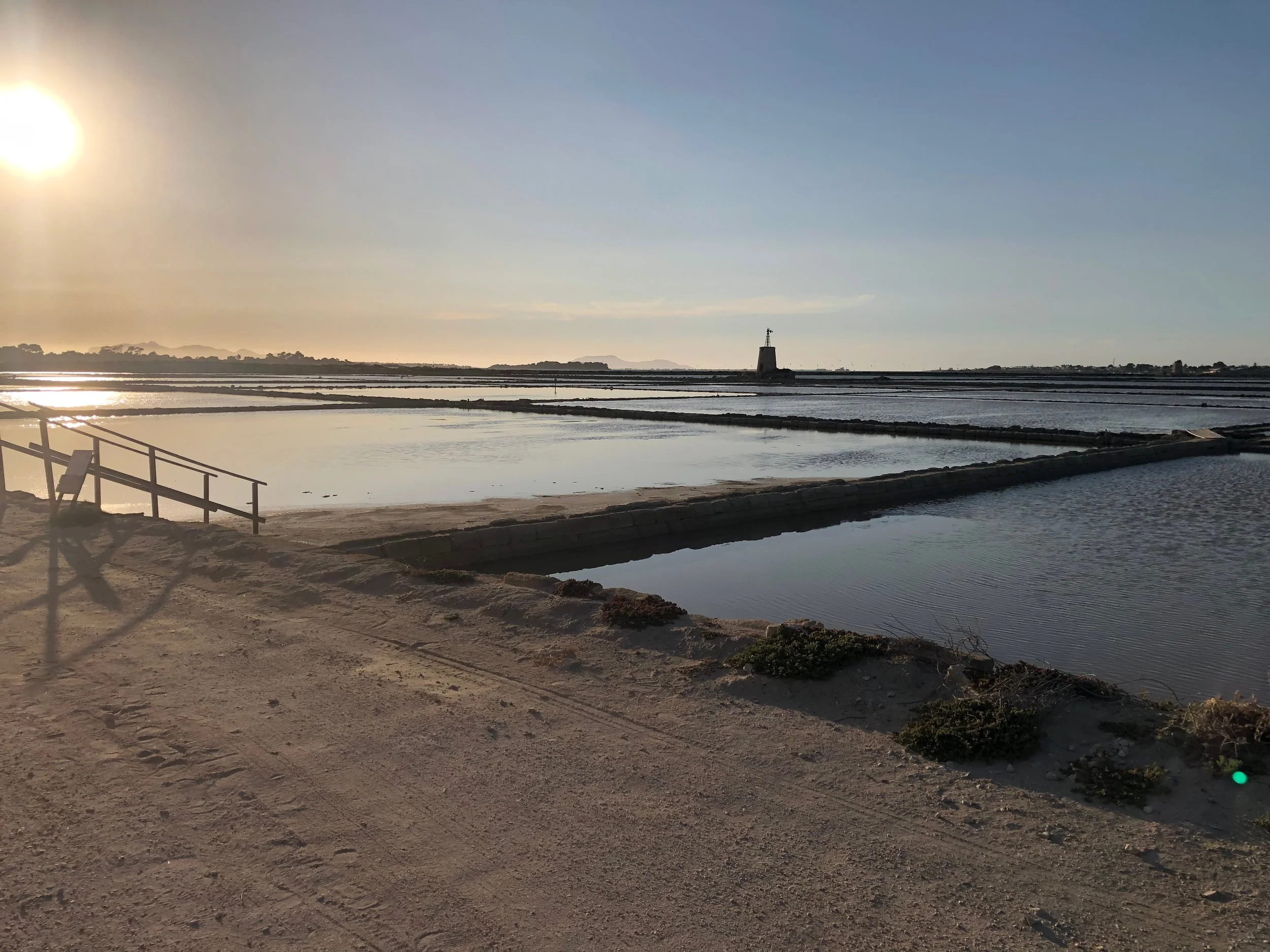
When we think about Sicily, salt flats are hardly the first thing that comes to mind—it’s more likely that the majestic Mount Etna is the first thing that comes to mind. And if I say you “Marsala”, for sure the first association is with the historic wine with same name. Yet the Trapani–Marsala–Paceco triangle is the Sicily’s most important sea-salt production zone, as well as one of its finest wine regions: many wine estates sit just minutes from the salt pans. This allows visitors to alternate between the reflective white pyramids of the Saline and the neat green vines of nearby wineries.
What do the two topics, wine and salt, have in common? More than you might think.
History: Phoenician settlers introduced both viticulture and salt-harvesting techniques more than 2,700 years ago; Arab and Spanish influences further refined them.
Climate and geography: Both salt and wine thrive on the same coastal plain. The sea salt that crystallizes in the ponds is the same sea spray that lightly coats grapes, imparting subtle salinity and minerality to wines like Grillo.
Economy and sustainability: Modern-day salinari (salt workers) and vignaioli (winegrowers) both practice low-intervention, sun-powered methods that are environmentally friendly. Many wineries source sea salt for culinary use, or use salt-pan water in irrigation trials.
If you have just a handful of days to visit this area and don’t want to miss either of the two attractions (wine and salt), here are a couple of suggestions:
1. Guided Salt & Wine Combo Tours
The so-called “Stagnone” (literally: “the big pond”) is the first unmissable place to visit that I strongly recommend., Especially from June to September, in the Saline Ettore & Infersa the workers are still raking salt, and at the sunset the iconic white pyramids of glowing salt reflect the sky’s shifting colors - pink, orange, golden yellow, and sometimes purple - in a mirror-like way.
It’s a stunning sight, and people enjoy it from the terrace of bars and restaurants widespread along the coast.
Several local operators offer half-day or full-day packages that include a visit to the Riserva Naturale Saline di Trapani e Paceco, a stop at the Museo del Sale, then a transfer to a nearby winery such as Cantine Florio, Cantine Pellegrino, or Cantine Donnafugata (all within 15–25 minutes). The day ends with a tasting of Marsala wine and other still wines paired with local products.
2. Boat Trip on the Stagnone Lagoon + Wine Cellar Visit
Mozia is one of the small island of Stagnone: it was a Phoenician island and still has vineyards (owned by Fondazione Withaker and managed by Tasca d’Almerita). A boat tour from here or Nubia takes you across the lagoon, and offer a view of salt pans from the water. Later you’ll dock near Marsala for a winery visit and tasting. Many boats offer onboard wine & cheese picnics.
These are just 2 ideas, but the zone offers much more, and if you are a fan of water sports you won’t be disappointed.
Salt & wine tourism in Western Sicily delivers a multisensory journey, and a less usual way to discover this island, which never end to surprise its visitors.